

Building the leadership infrastructure the Arab world needs.
By 2036: ten thousand leaders, hundreds of institutions, and a connected region — developed in our region, in our language, by our people.
ALI was born at Harvard, out of a set of questions that refused to go away.
Why were other societies able to build institutions like Harvard, Stanford, and MIT?
Why does our region still lag in development, education, and rights — despite its enormous potential?
Why do so many countries in the region still struggle with conflict, civil war, and violence?
Why did the Arab Spring begin with so much hope — and fail to achieve lasting change?
Why does a region of 450 million people, united by language and history, remain so fragmented?
The answer, we realized, was leadership.
Not leadership as a position of power — but the capacity of people, in governments, civil society, communities, and institutions, to mobilize others toward adaptive change. Leadership honest about what the problems actually are. Leadership that can hold complexity without collapsing it into simple answers.
In our region. In our language. By our people.
The Arab world does not lack talented, committed, and visionary people. What it lacks is the infrastructure to find them, develop them, connect them, and sustain them over the long arc of change. ALI contributes to building that infrastructure.
How we believe change happens.
Institutions do not change themselves. Policies do not implement themselves. Change happens when people — acting within institutions, communities, and systems — develop the courage, relationships, legitimacy, and adaptive capacity to lead others through complexity. Leadership is the primary pathway through which broader change becomes possible.
This is not a linear process. Change rarely begins with new policies. It begins with less visible shifts — greater trust, stronger relationships, new ways of framing problems, the confidence to act. These early changes are not secondary outcomes. They are evidence that transformation has already begun. ALI is one actor in a larger ecosystem — but the one focused, with singular commitment, on the leadership infrastructure that makes every other actor more effective.
Building leadership infrastructure.
Before leaders can transform a region, they need knowledge rooted in it, education worthy of it, and a community that sustains them within it.
Produce knowledge from the region, for the region.
The Arab world has been studied far more than it has been heard. ALI will build the leading body of leadership knowledge emerging from Arab experience — documenting how leaders navigate conflict, reform institutions, and govern communities, in Arabic, as the original, not the translation. Applied to Libya, Sudan, Syria, and Palestine, this is an intellectual contribution that helps fill a significant gap in the literature. Arab experience will contribute to global leadership thinking — it will not merely consume it.
“The ALI course gave me a much clearer vision and helped me see leadership and authority from a completely different perspective — a chance to look at familiar concepts in new ways.”
Deliver world-class leadership education in Arabic.
Leadership is not learned in classrooms; it is developed through real adaptive challenges in real communities. Our programs bring leaders into direct contact with the institutional failures and social fractures they will spend their careers addressing — the curriculum is the region itself. Running through every program is a single question — leadership for what purpose? Ethical formation is not a module in the curriculum; it is the spine of it. By 2028, this model anchors the Master of Leadership and Governance, the first degree of its kind in the Arab world, with Harvard, MIT, and regional partners.
“The ALI workshop transformed my view of leadership from a position to a practice. Unlike past theoretical trainings, it was situational, practical, and deeply engaging.”
Learn from those who connect ideas to action.
ALI’s faculty bring together internationally recognized scholarship and decades of leadership experience across the Arab world and beyond. They have taught at leading universities, advised governments, led international organizations, built institutions, and worked alongside communities facing complex challenges. By combining rigorous research with practical wisdom and regional experience, they help participants develop the judgment, courage, and adaptive capacity required to lead meaningful change.
Transforming the region.
Leadership infrastructure exists to serve a purpose. ALI’s purpose is a more just, more connected, and more dignified Arab world.
Build a more connected Arab region.
Regional integration is the Arab world’s greatest untapped opportunity — and one of its most persistent failures of leadership. It is not primarily a technical challenge but a leadership one: building the trust, institutions, and political will that cross-border cooperation demands, led by people who think beyond national boundaries. This pillar gives the others their purpose: we strengthen institutions so they can cooperate, widen access so no country’s leaders are left behind, and govern technology so it connects rather than divides.
Strengthen institutions that serve the public good.
The region’s most urgent challenges are institutional failures — systems that cannot deliver, organizations that cannot sustain themselves. ALI’s Adaptive Leadership Consultation model moves from one-off diagnosis to ongoing partnership, with a special commitment to conflict and post-conflict contexts: Sudan, Libya, Syria, Yemen, Gaza. The ecosystem we are building toward: leaders who grow inside strong organizations, inside a functional civil society, connected to responsive government and a dynamic private sector — and increasingly, to counterparts across the region.
Democratize access to leadership development.
Talent is distributed across the Arab world; opportunity is not. A young leader in Khartoum, Taiz, Gaza, Nouakchott, or Asyut deserves the same quality of education as one in Boston or London. Three pathways — self-paced, online, and in-person — reach leaders wherever they are.
“Leadership doesn’t always mean providing solutions, but sometimes asking the right questions and creating an environment for experimentation and learning.”
Harness innovation and technology for human flourishing.
Who decides how AI is deployed in Arab public institutions? Who governs the technologies reshaping Arab societies? Who ensures digital transformation connects rather than divides a fragmented region? These are questions of values, power, and institutional design — and they demand leaders with the ethical clarity and regional rootedness to answer them from within — not by importing frameworks designed elsewhere. ALI is positioned to develop those leaders, and to use digital tools to extend its reach wherever Arab leaders are, including in displacement and diaspora.
Develop courageous leaders for divided and uncertain times.
Integration cannot be built by cautious leaders. It requires people capable of adaptive change — transformation of values, habits, and ways of working across political lines. The Arab world has no shortage of technical managers. What it needs is leadership equal to its adaptive challenges.
“How is authority different from leadership? This workshop opened my eyes to a new way of understanding and practicing leadership.”
Sustaining the movement.
Ten thousand leaders, developed over a decade, connected for life. That is the movement ALI is building.
Build the Arab Leadership Network.
Leadership development does not end with a program. ALI is already connecting fellows, alumni, and partner organizations from Libya, Jordan, Palestine, Sudan, Egypt, Yemen, and beyond. By 2036 the network will span every Arab country — a platform for mentorship, collaboration, and collective problem-solving at regional scale, built one relationship and one act of cross-border leadership at a time. The most powerful evidence of ALI’s impact is not what happens inside our programs, but what our alumni do when they leave them — their credibility is ALI’s credibility; their impact is ALI’s proof.
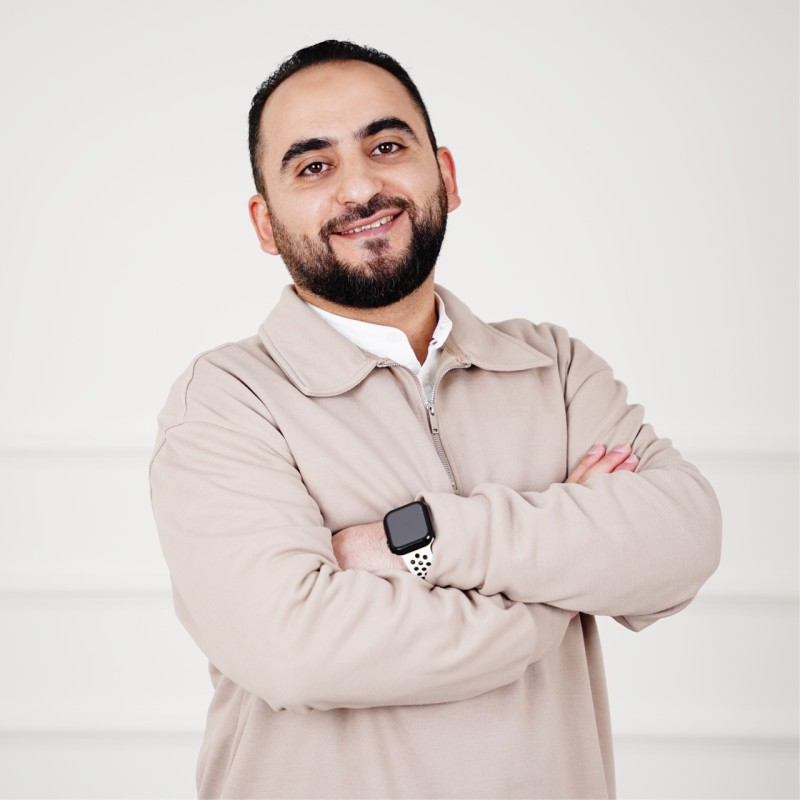
“I learned that leadership is an activity, not a title — and that everyone is capable of practicing it.”
Our alumni are not graduates of a training program. They are members of a movement committed to advancing justice, dignity, and human flourishing — and to holding each other accountable for doing so.
Ten thousand leaders. Developed over a decade. Connected for life.
Every relationship, every conversation, every act of cross-border leadership — the human infrastructure of a more connected Arab region.
The institution that transformed how leadership is developed in the Arab world.
By 2036, ALI will have built the region’s leading ecosystem for leadership education, knowledge creation, institutional strengthening, and regional collaboration — 10,000 leaders, hundreds of partner organizations, and a vibrant Arab Leadership Network laying the foundations for a more peaceful, prosperous, integrated, and flourishing Arab region.
The founding questions have not been answered yet. Why does conflict persist? Why do institutions fail the people they are meant to serve? Why does talent leave rather than stay and build? Why does a region of 450 million remain so fragmented?
They will not be answered by any single institution — but they can be answered by a generation of leaders equipped, connected, and challenged to take them seriously.